Crunch9.0
The crunch
Loud. Hand-cooked crisps can be hard rather than crunchy, but these break cleanly and keep their snap to the bottom of the bag.
Tasted over a week, in daylight and after dark, with and without a glass. The plainest crisp on the shelf, and one of the hardest to get right.
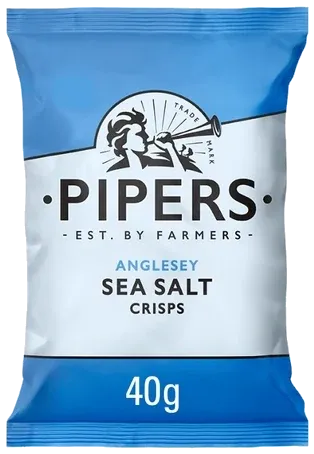
A proper crisp, done properly.
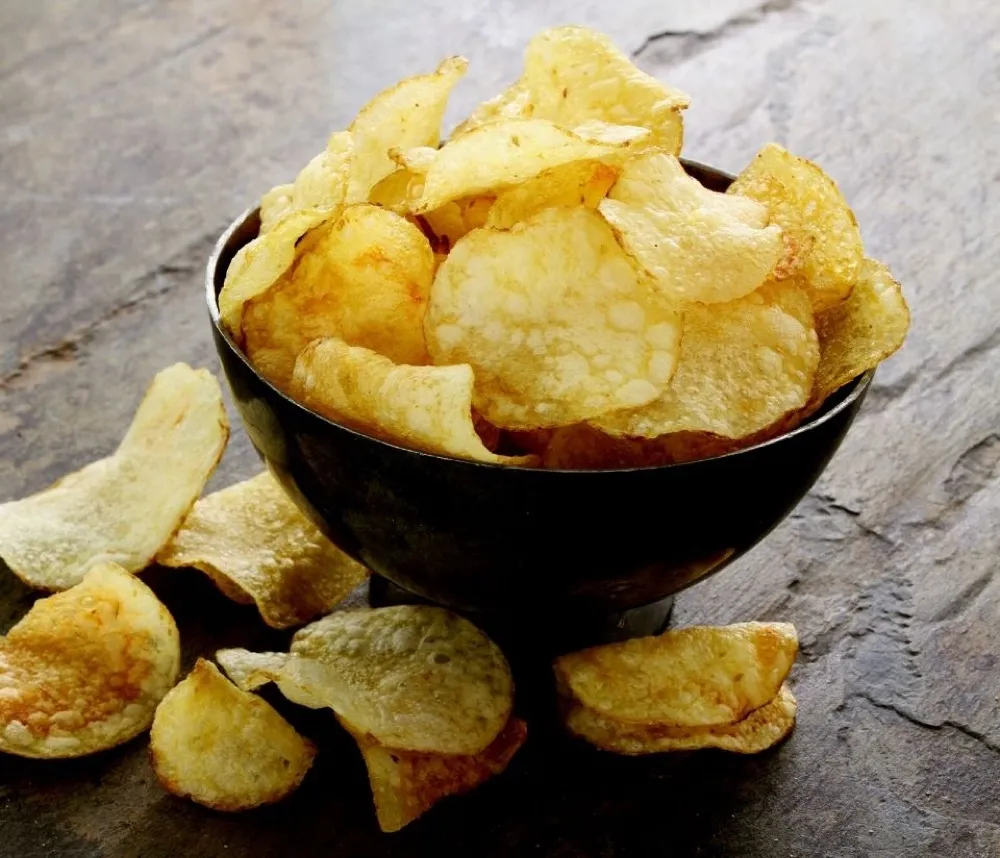
Thick, golden and slightly folded, with the skin left on at the edges. The salt is visible, which is rarer than it should be.
Loud. Hand-cooked crisps can be hard rather than crunchy, but these break cleanly and keep their snap to the bottom of the bag.
Lightly salted means what it says. You taste potato first, then salt, and the balance holds even on the broken bits at the end.
Clean, a little sweet from the potato, and gone quickly enough that you reach for another. Which is the point.
Strong enough for something thick. Soured cream and chive is ideal, though it doesn't need the help.
A crisp, lemony white from the south of France. The acidity cuts through the salt and fat, and the crisp makes the wine taste rounder. Around £10.
If not Picpoul
Muscadet, or a dry English sparkling wine.
Each crisp is tasted over a week: from the bag, from a bowl, with a dip and with a glass.
The sound, the snap and how long it holds up. A crisp that goes soft by the fourth one loses marks.
Does it taste of what the packet says? Is it spread evenly, or is it all at the bottom of the bag?
What stays after you swallow. Pleasant, gone too soon, or still there an hour later.
Strength and shape. Can it scoop a thick dip without breaking, and does it still taste of itself?
The overall score is the average of the four, rounded to one decimal place. If two crisps tie, crunch decides.
The public vote is a separate shortlist: ten crisps, chosen from your nominations, one vote each. This month's ranking is open.
Every review since the Academy opened, with its pairing.